A recent study published in Immunity reveals that dietary components, particularly lipopolysaccharide (LPS), can directly influence the development and diversity of gut immunity, even in the absence of microbiota. Although it has been shown that the gut immune system interacts with both microbes and diet (for example, microbial fermentation of dietary fiber into short-chain fatty acids that support immune function), it is still unclear whether diet alone can influence immunity, especially during early childhood. Catherine Mooser and colleagues (University of Bern) studied how different diets influence gut immunity in germ-free mice, focusing on immunoglobulin A (IgA), a key antibody in mucosal protection. The mice were raised on complex grain-based, high-fat, or starch-rich diets under sterile conditions. The study found that mice fed simpler purified diets had fewer and less diverse IgA antibodies compared to mice fed only food, but this effect was limited to diets administered from birth; dietary changes in adulthood did not alter immune profiles. The complex food contained natural LPS contaminants, correlated with increased activity of intestinal immune cells. Mice genetically unable to respond to LPS showed a reduced number of immune cells regardless of diet, confirming the role of LPS in stimulating gut immunity. Interestingly, simply adding LPS to a purified diet was not enough to restore immune activity. However, co-administration of LPS with proteins within lipid particles (liposomes) greatly enhanced IgA production and immune cell activation. These results demonstrate that dietary LPS, particularly if presented in lipid-based forms, can mimic microbial signals and guide the development of mucosal immunity during critical stages of early childhood. The study highlights the potential of dietary interventions in shaping gut immunity and suggests implications for both industrialized food systems and microbe-based drug delivery.
©
LPS e sviluppo immunitario intestinale
LPS e sviluppo immunitario intestinale
2025-09-14 15:49
2025-09-14 15:49
Romina Giuliani
Romina Giuliani
LPS, dieta, risposta-immunitaria, immunita, microbiotaedintorni, lps, modulazione-microbiota, iga,
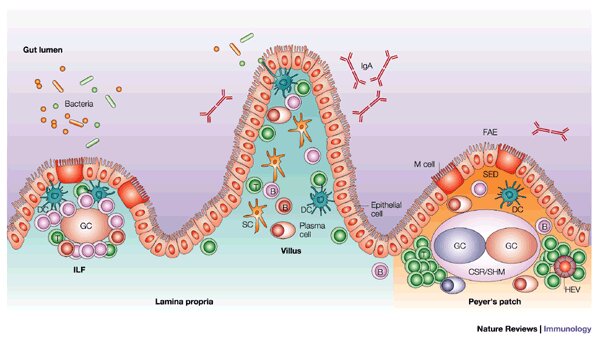
Gli interventi dietetici possono modellare l'immunità intestinale
©